Understanding the Japanese Sense of the Sacred
In the previous article, we looked at the kami who appear in Japan’s ancient myths, such as Amaterasu and other deities described in the Kojiki and Nihon Shoki.
But the Japanese sense of kami does not end with mythology.
Throughout Japanese history, people have also come to worship historical figures as kami. Nature itself can be sacred: a mountain, a waterfall, an ancient tree, or a particular place. In this sense, the world of kami extends far beyond the stories of ancient mythology. It reaches into Japanese history, nature, local communities, and even everyday life.
The Japanese word kami is often translated as “god” or “deity,” but neither word completely captures the Japanese sense of the sacred.
A kami can be a deity from ancient mythology, a historical person who came to be worshipped after death, a sacred presence associated with nature, or a guardian of a local community. There can be kami in a mountain, a waterfall, an ancient tree, a local shrine, or even in the memory and history of a person who once lived as an ordinary human being.
This may sound strange from a Western perspective, where the sacred is often understood as something distinct from the ordinary world. But in Japan, the sacred is not necessarily separated from everyday life. It can exist quietly alongside ordinary people—in the places where they live, in the natural world around them, and in traditions passed down through generations.
When Human Beings Become Kami
One of the most surprising aspects of the Japanese concept of kami is that a person who once lived as a human being can later be worshipped as a kami.This does not mean that every respected person becomes a kami. Rather, throughout Japanese history, certain people have been deified because of their achievements, influence, or the role they came to play in the spiritual life of a community.
Sugawara no Michizane — From Angry Spirit to Deity of Learning
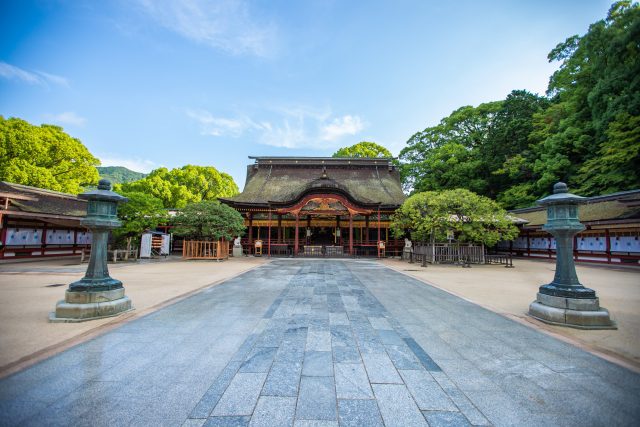
Sugawara no Michizane (845–903) was a court noble, politician, scholar, poet, and master of calligraphy. In 901, he was falsely accused of political wrongdoing and was sent into exile in Dazaifu, Kyushu, where he died two years later.
After his death, a series of disasters in Kyoto—including lightning strikes and deaths among people associated with his political downfall—were interpreted as manifestations of his angry spirit. People feared that Michizane’s spirit had become a powerful onryō, or vengeful spirit.To appease his spirit, shrines were established in his honor.
He eventually came to be worshipped as Tenjin, the kami of learning, culture, and the arts. Today, students throughout Japan visit Tenjin shrines to pray for success in examinations.
The transformation is remarkable: A feared spirit became a revered kami.
Today, Dazaifu Tenmangu in Kyushu and Kitano Tenmangu in Kyoto are two of the most famous shrines dedicated to Michizane.
Tokugawa Ieyasu — A Ruler Who Became Kami
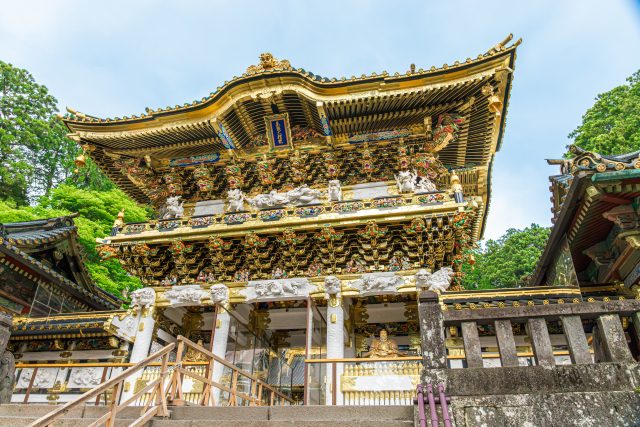
Another famous example is Tokugawa Ieyasu, the founder of the Tokugawa shogunate. After decades of civil war, Ieyasu established a political order that brought a long period of relative peace to Japan.
He died in 1616 and was later enshrined as Tosho Daigongen, a deified form of Ieyasu. Nikko Toshogu is one of the most famous shrines dedicated to him.
Here again, a historical human being became a kami after his death.
Three Ordinary Men Become the Kami of Asakusa
There is an even more unusual example in my hometown of Asakusa, Tokyo.
According to the traditional story, in 628 two fishermen, the brothers Hinokuma Hamanari and Hinokuma Takenari, found a small statue of Kannon Bodhisattva in a fishing net in the Sumida River. A local landowner, Hajino Matsuchi, recognized the religious significance of the statue and helped establish the Buddhist temple that became Senso-ji.
These three men are enshrined at Asakusa Shrine, next to Senso-ji, as its three kami. They are known as the Three Founders of Asakusa.
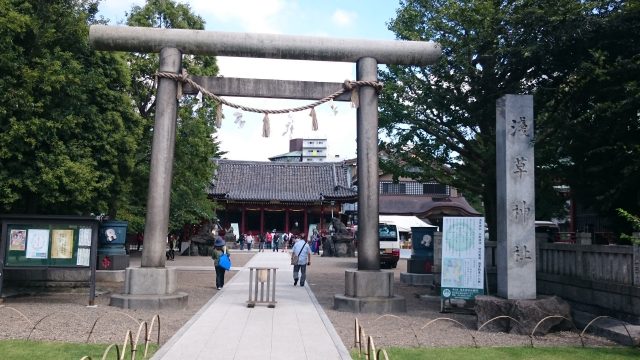
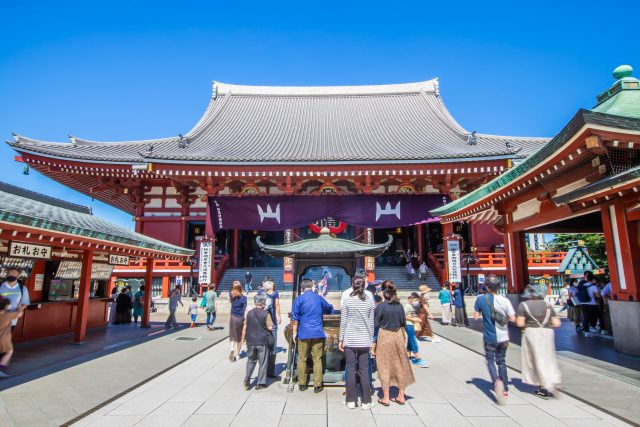
This is a particularly interesting example because they were not emperors or legendary heroes. They were ordinary people who became sacred figures in the history of their community.
When Nature Becomes Sacred
Human beings are not the only things that can become part of the sacred world. Nature itself can be sacred.
For people who lived closely with nature, mountains, waterfalls, forests, and enormous trees could inspire both awe and gratitude. Nature could provide food, water, and shelter, but it could also bring destruction through storms, floods, earthquakes, and volcanic eruptions.
This combination of fear, respect, gratitude, and dependence is an important part of the Japanese relationship with nature.
Mount Fuji
Mount Fuji is perhaps the most famous example.
For centuries, the mountain has been regarded not simply as a beautiful landscape, but as a sacred presence. Its beauty inspired admiration, while its volcanic power inspired fear.
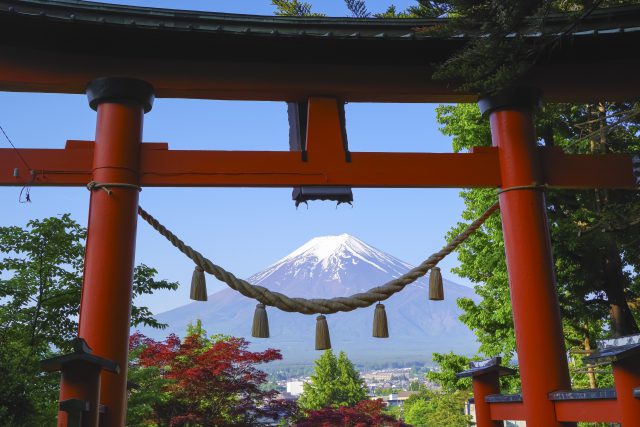
At the summit of Mount Fuji stands Fujisan Hongu Sengen Taisha Okumiya, the inner shrine of Fujisan Hongu Sengen Taisha. The shrine is dedicated to Asama-no-Okami, identified with Konohanasakuya-hime, a deity closely associated with Mount Fuji. The mountain itself has long been the object of religious devotion, and the summit remains part of this sacred landscape.
I explore this long relationship between the Japanese people and the mountain in “Mt. Fuji: The Sacred Symbol of Japan.”
Today, many people see Mt. Fuji simply as one of Japan’s most beautiful landscapes. But for many centuries, it was also a sacred mountain.
Nachi Falls
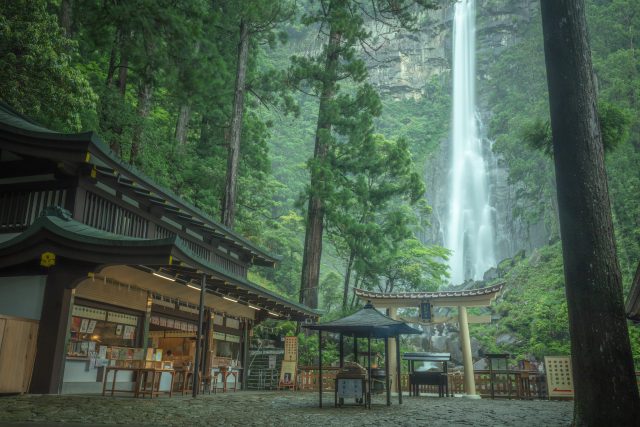
Nachi Falls in Wakayama Prefecture offers another striking example.
The waterfall has been a focus of nature worship since ancient times and became the spiritual center of the religious tradition of Kumano.
At Kumano Nachi Taisha, the waterfall is closely connected with the sacred landscape. Its associated shrine, Hirou Shrine (Hirou-jinja), known as the auxiliary shrine of Kumano Nachi Taisha, does not enshrine the sacred presence in a conventional shrine building. Instead, the waterfall itself is worshipped as the *shintai*, or sacred object.
This is a remarkable example of how, in Japan, nature itself can become the focus of worship. The waterfall is not simply a beautiful natural attraction. It is a sacred presence.
Ancient Trees and Sacred Forests
The same feeling can be found in enormous ancient trees and old forests throughout Japan. A tree that has stood for hundreds or even thousands of years can inspire the feeling that it is more than simply a living plant.
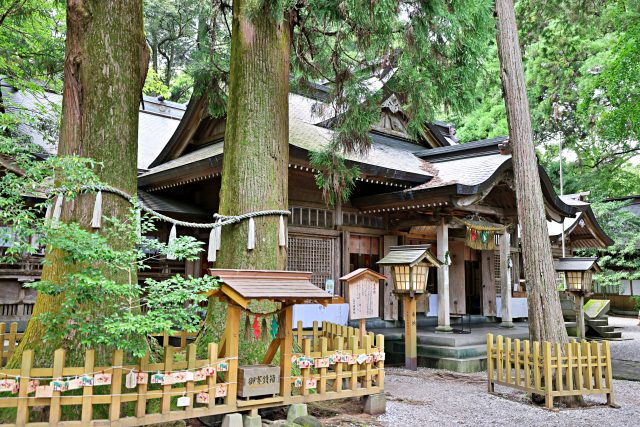
Meoto Sugi(Japanese cedar) wwith Shimenawa
Such trees may be marked with a shimenawa, a sacred rope indicating that the place or object is regarded as sacred. A shimenawa is not simply a decoration. It can mark a boundary between the ordinary and the sacred.
This is one reason why the boundary between “nature” and “the sacred” can be difficult to define in Japan.
You can see this in many parts of Japan, where an ancient tree is marked with a shimenawa, a sacred rope that indicates that the tree is regarded as sacred. At some shrines, the tree itself is considered a shintai, a sacred object in which a kami is believed to reside.
Kami in Ordinary Towns and Villages
The kami found in famous shrines and sacred mountains are only part of the story. Throughout Japan, small communities have their own sacred places, local traditions, and guardian kami.
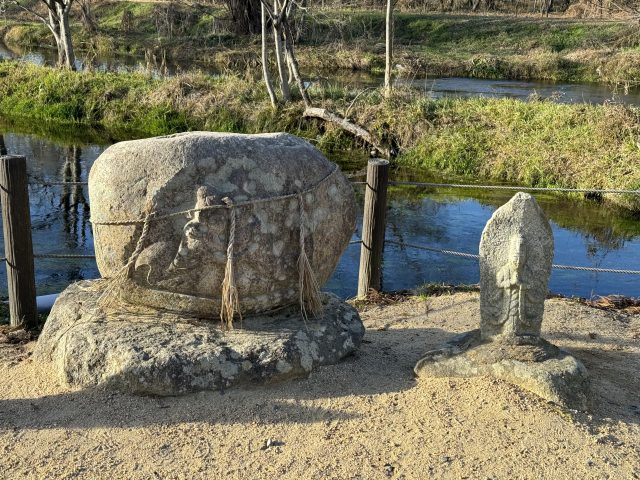
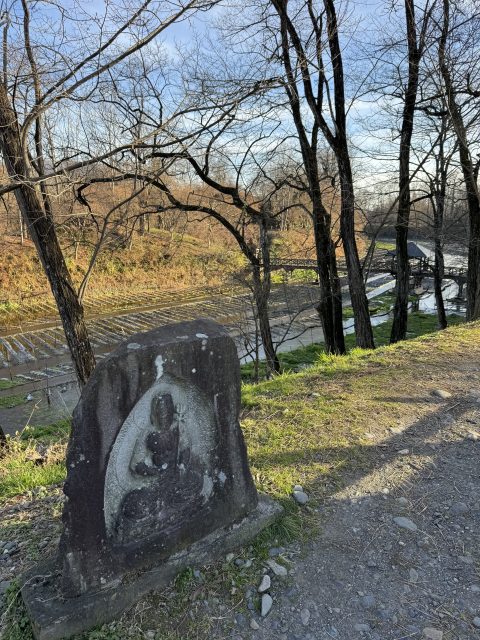
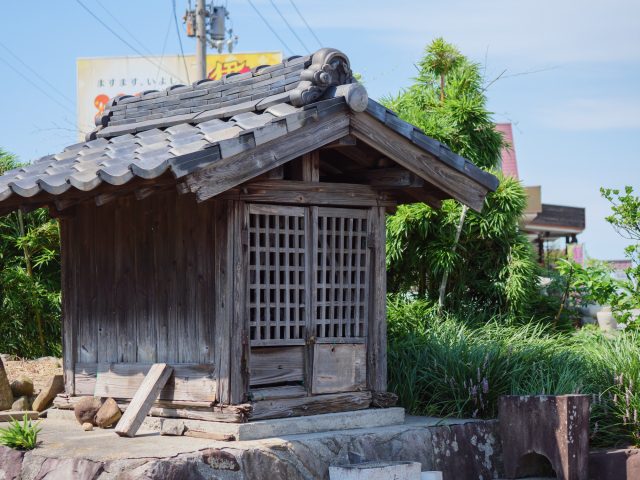
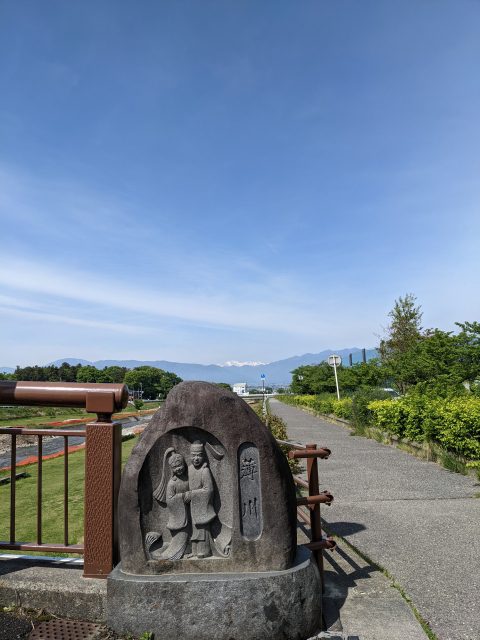
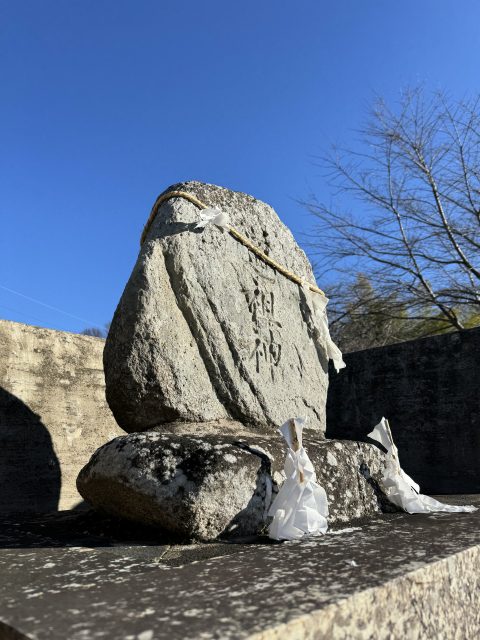
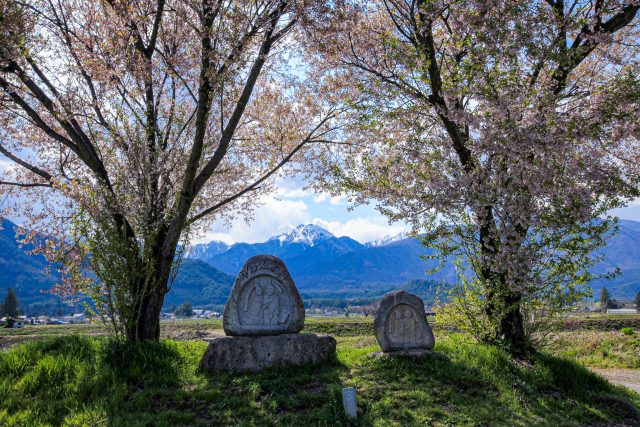
A small shrine may stand at the entrance to a village, beside a road, near a rice field, or quietly among houses. Some of these sacred places are associated with “Dōsojin (道祖神)”, guardian deities traditionally believed to protect travelers and local communities from harm and misfortune. They are often found near roads, village boundaries, mountain passes, or other places where people enter or leave a community.
These sacred places may also be associated with the protection of agriculture, water, travel, prosperity, or the well-being of residents. Some communities have worshipped the same local kami for generations. The images below show actual examples of Dōsojin found in Japan.
Many Japanese communities also hold an annual festival for the *kami* they have traditionally worshipped. For local people, such a festival is not simply a tourist event. It is a time to return to the community, reconnect with family and neighbors, express gratitude, and pray for the continued well-being of the people and the land.
For many Japanese people, this connection to a particular place is part of what “Furusato” means—a hometown not only remembered as a place, but felt through memories, people, traditions, and a sense of belonging. I explore this deeper meaning of “Furusato” in “Furusato: Meaning, Culture, and the Japanese Sense of Hometown.”
The details of these festivals vary greatly from one region to another, reflecting the history, landscape, and traditions of each community. They are part of the rich diversity of Japanese local traditions.
Kami in Modern Japanese Life
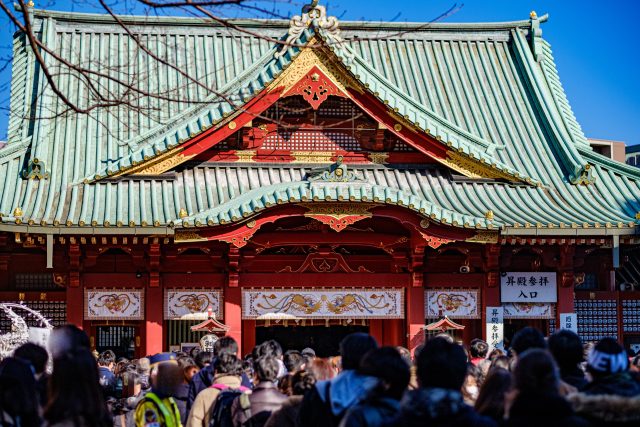
Kanda Myojin
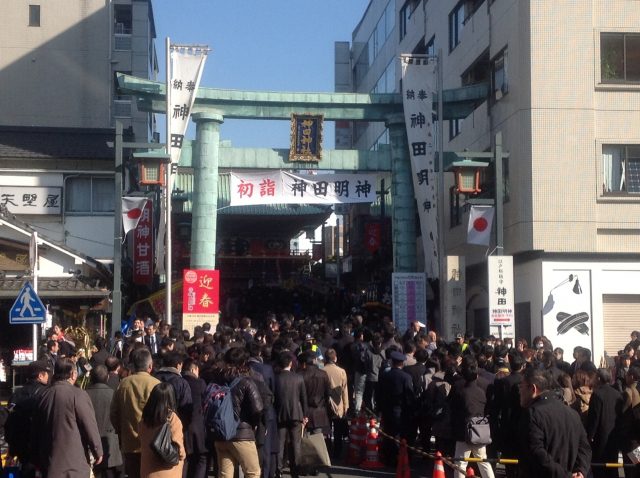
This sense of the sacred can still be seen in everyday Japanese customs. At New Year, millions of people visit shrines for Hatsumode, their first shrine visit of the year. Families visit shrines for Shichi-Go-San, praying for the healthy growth of their children. People also visit particular shrines to pray for success in examinations, good health, safe childbirth, business prosperity, or protection from misfortune.
visit here
The same can be seen in the business world. Some Japanese companies maintain a small shrine or sacred space on their premises, while business owners and employees visit shrines at the beginning of the year to pray for prosperity and the safety of their business. For example, Kanda Myojin in Tokyo and Imamiya Ebisu Shrine in Osaka are well known for their connection with business prosperity.
The important point is not that every Japanese person consciously follows a religious doctrine. Rather, these customs show how the idea of kami can remain part of everyday life even in modern Japan.
What Does Kami Mean to Japanese People?
After looking at these examples, it becomes difficult to give one simple definition of kami. A kami can be:
- a deity appearing in ancient mythology
- a sacred presence associated with nature
- a historical person who became deified
- a guardian of a village or community
- a spiritual presence associated with a particular place
- something to which people express gratitude, respect, or a wish
This is why I hesitate to translate kami simply as “God.” The English word God, especially when capitalized, usually suggests one supreme and omnipotent being. The word deity is more flexible and is useful when explaining the many sacred beings of Japan. But even deity does not completely capture the Japanese idea of kami.
Perhaps the most important point is that Japanese people do not always think of kami as something separate from everyday life. A kami can be in the mountain, the waterfall, the ancient tree, the local shrine, the historical figure, or the place where generations of people have prayed.
Living with the Kami Around Us
For many Japanese people, kami are not distant beings living in a completely separate spiritual world. They can be felt in the places where we live, in nature, in local traditions, and in customs passed down through generations. This may help explain why Japanese people often treat ordinary things with care.
A tool is not simply a tool.
A natural place is not simply a landscape.
A shrine is not simply an old building.
And a small roadside shrine is not simply an object standing by the road.
There may be something sacred there. Of course, not every Japanese person consciously thinks about Yaoyorozu no Kami in daily life, and Japan today is a modern and increasingly secular society. Yet this ancient way of seeing the world continues to live quietly beneath many aspects of Japanese culture.
When you visit Japan, I hope you will look beyond the beautiful architecture of its famous shrines and temples.
Look at the small shrine in a neighborhood.
Look at an ancient tree wrapped in a shimenawa.
Look at the mountain that has been worshipped for centuries.
And remember that, for many Japanese people, these are not merely things to see. They are part of a living landscape of the sacred. So please treat them with respect—and, above all, please do not pollute or damage them. Because the Japanese sense of kami is not only about what people believe.
It is also about how people live with the world around them.


コメント