
Introduction

Why is Japan’s Shinkansen so punctual?
With an average delay of less than one minute, Japan Shinkansen punctuality is considered one of the most precise train systems in the world. Many travelers wonder why Japanese trains are always on time.
My wife and I often take the Shinkansen to Kyoto to visit our daughter and her family, including our grandchildren. Each trip is not only a chance to spend precious time together, but also an opportunity to enjoy the beautiful scenery and rich culture of Kyoto.
I often hear that foreign visitors are amazed by the punctuality of the Shinkansen. For us Japanese, however, it is nothing unusual for the train to depart and arrive exactly on time. Even when there is a slight delay of just a few minutes, the conductor makes a polite apology to passengers. This extraordinary level of punctuality, combined with high speed and safety, is one of the reasons why many visitors are eager to experience the Shinkansen during their stay in Japan.
But why is it so punctual?
The answer lies not only in technology, but also in Japanese culture and history.
What Is the Shinkansen?

The Shinkansen, known as Japan’s high-speed railway, began commercial operation on October 1, 1964, just ten days before the opening of the Tokyo Olympic Games. It became a powerful symbol of Japan’s recovery from the devastation of World War II and its rapid economic growth. In its early days, the Shinkansen ran at a top speed of 210 km/h, taking about four hours to travel from Tokyo to Osaka—a journey that had previously taken six and a half hours.
Today, thanks to continuous technological improvements, the maximum speed has increased to around 285 km/h, and the travel time between Tokyo and Osaka has been reduced to approximately two hours and twenty-one minutes. The network now stretches from Hokkaido in the north to Kyushu in the south, covering most of the Japanese archipelago. The Tokaido Shinkansen line, connecting Tokyo and Shin-Osaka, is the busiest, with trains departing every three to four minutes during peak hours.
For more detailed and up-to-date figures about the Shinkansen, including passenger numbers and operational data, please refer to the official information provided by Central Japan Railway Company (JR Central).
How Punctual Is the Shinkansen?
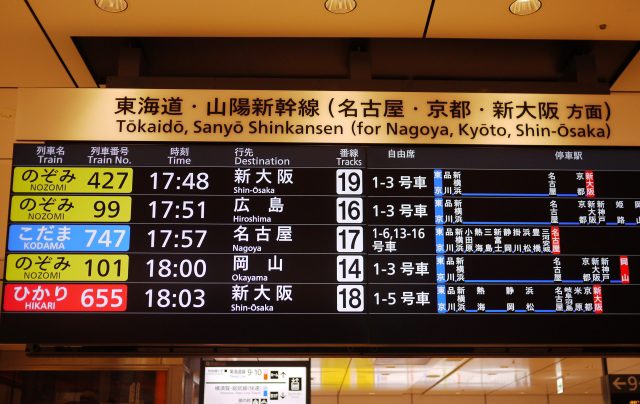
Despite such a busy schedule, the Shinkansen maintains an incredible level of punctuality. The average delay is said to be only about one minute. This level of precision often surprises foreign visitors. In Japan, a delay of less than one minute is still considered “on time.” In many other countries, delays of five to fifteen minutes may be tolerated, making Japan’s standards among the strictest in the world.
So how has Japan achieved this remarkable level of punctuality?
Why Is the Shinkansen So Punctual?
The punctuality of Japan’s Shinkansen is not the result of a single factor, but a combination of advanced technology, strict operational systems, and Japanese punctuality culture.
High-precision scheduling, dedicated railway tracks, and continuous maintenance ensure that delays are minimized. However, equally important is the cultural mindset in Japan, where being on time is considered a form of respect and responsibility toward others.
In other words, Japan Shinkansen punctuality is the result of both engineering excellence and deeply rooted cultural values.
The Cultural Background of Time in Japan
To understand this, it helps to look at how time was measured in the past:
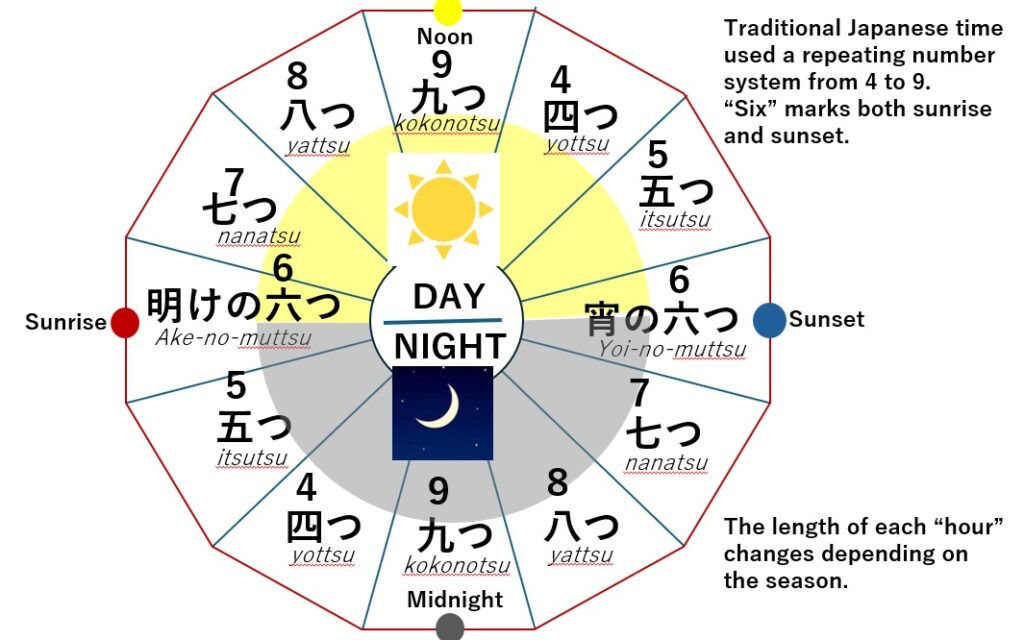
Time was divided based on sunrise and sunset, so the length of each “hour” changed depending on the season.
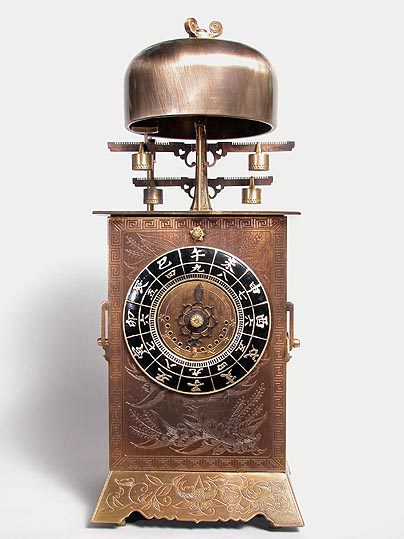
Time Before Modern Japan
Before the Meiji Restoration in the mid-19th century, Japan used a very different way of measuring time known as the temporal hour system(Futeijiho). In this system, the length of an hour changed depending on the season. Daytime—from sunrise to sunset—was divided into six equal parts, and nighttime—from sunset to sunrise—was also divided into six parts. As a result, an “hour” in summer was much longer than in winter. People did not think of time in precise units like minutes or seconds as we do today.
*Photo of Wadokei :courtesy of KONISHI METALLIC MODEL COLLECTION
A Different Sense of Time

Because of this flexible system, people were not concerned with strict punctuality. Even the time difference between cities, such as Tokyo and Kyoto, could vary by about twenty minutes depending on sunrise. However, this did not cause problems in daily life, as long-distance communication was limited. In other words, precise timekeeping was simply not necessary. People lived according to the natural rhythm of sunrise and sunset, rather than precise clock time.
The Shift to Modern Time
With the start of the Meiji era, Japan rapidly modernized by adopting Western systems, including the fixed time system we use today. This sudden change caused confusion. Many people struggled to adapt—students arrived late to school, and workers failed to show up on time at factories. However, over time, Japanese society gradually adjusted to this new system.
This transition marked a shift from a “natural rhythm” of life to a more structured “industrial and social rhythm.”
If you would like to explore this topic further, the following types of books can offer deeper insights into the cultural background behind Japan’s punctuality:
- Japanese culture and society – understanding everyday values and social behavior
- Japanese craftsmanship (monozukuri) – the spirit of precision and attention to detail
- Japanese railways and engineering – the systems behind the Shinkansen’s reliability
Why Are Japanese People So Punctual?
Although Japan adopted modern timekeeping only about 150 years ago, punctuality has become a deeply rooted cultural value. Here are some key factors behind this transformation:
1. Courtesy and Respect for Others
In Japan, being late is considered inconsiderate. People believe that delays inconvenience others, so punctuality is seen as a basic form of respect.
This idea of valuing each moment is similar to the Japanese concept of Ichigo Ichie.
2. Group-Oriented Society
Japanese society places strong emphasis on harmony and group coordination. Being on time helps maintain order and ensures that everyone can act together smoothly.
3. Trust Over Contracts
In many situations, trust is valued even more than written agreements. Being late can damage that trust, so people make a strong effort to be punctual.
4. Attention to Detail
Japanese culture is known for its attention to detail, whether in craftsmanship or daily behavior. This mindset contributes to precise systems like the Shinkansen.
The same sense of discipline can also be seen in Japan’s cleanliness and social order, as discussed in Clean Japan.
5. Influence of Spiritual and Ethical Values
Japanese culture has been influenced by philosophies such as Buddhism, which emphasizes consideration for others. Avoiding inconvenience to others naturally leads to punctual behavior.
Conclusion: The Cultural Secret Behind Shinkansen Punctuality
The punctuality of the Shinkansen is often explained by advanced technology and precise operation systems. However, the true reason goes much deeper. It is rooted in a cultural mindset that values respect, responsibility, and trust. Being on time is not just about efficiency—it is a way of showing consideration for others.
In this sense, the Shinkansen is more than just a high-speed train.
It reflects how Japanese society harmonizes modern innovation with long-established cultural values.
The precision of the Shinkansen is not only the result of advanced engineering, but also a reflection of Japan’s deep-rooted culture of craftsmanship and attention to detail.

Textile Crafts & Knives & Katana in Japan
(Photo courtesy of Wabunka).
If you are interested in experiencing this spirit firsthand, you may enjoy exploring traditional crafts in Japan. Activities such as Kintsugi (golden joinery), pottery and ceramics, chopstick making, textile crafts, or even traditional knife and sword craftsmanship offer a glimpse into the same mindset that values precision, care, and dedication.
👉 [Explore authentic Japanese craft experiences with Wabunka]
To better understand the mindset behind this culture, books on Japanese work ethic and discipline provide valuable perspectives on how punctuality and responsibility are deeply rooted in daily life.
If you’d like to explore this topic further, this book offers a fascinating insight into Japanese work ethic and discipline: [The Shokunin Mindset ] Japanese Lessons for Work and Mastery (The Shokunin Series)




コメント