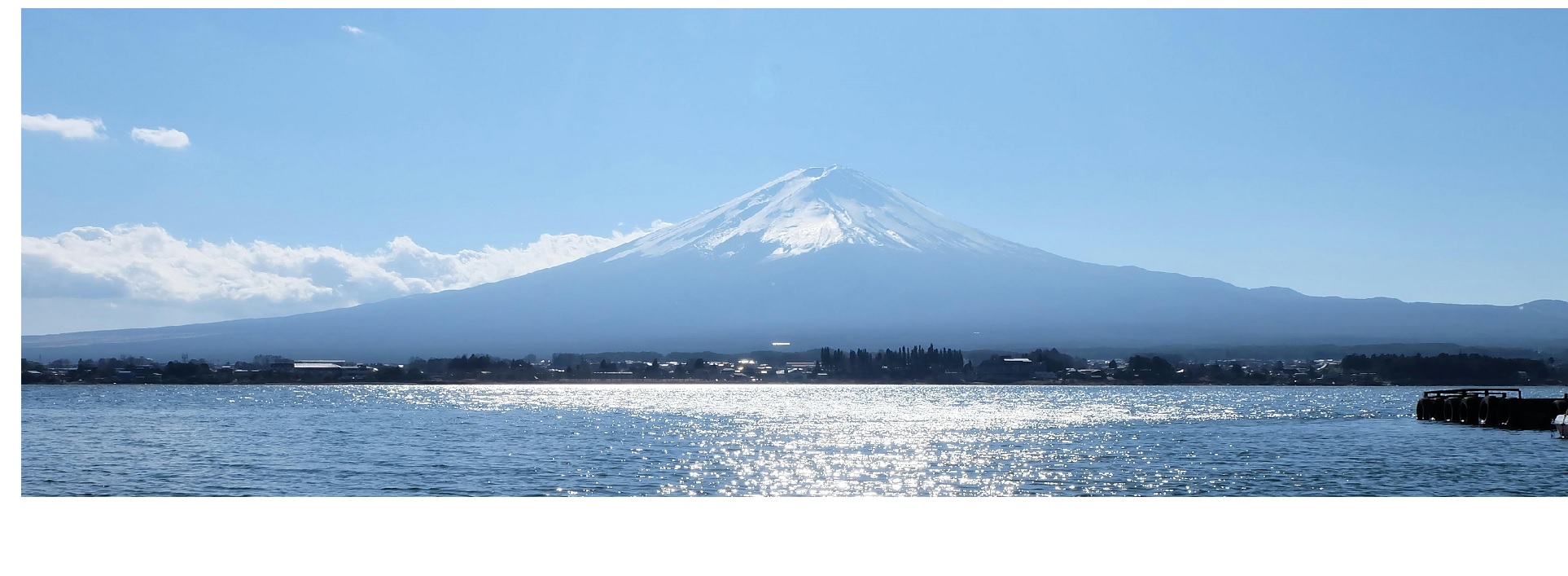
Introduction
Mount Fuji is one of the most iconic symbols of Japan, known for its perfect shape and breathtaking presence. But beyond its beauty, Mt. Fuji holds a much deeper meaning in Japanese culture — as a sacred mountain, a source of inspiration, and a spiritual landmark.
From ancient beliefs to modern-day life, Mt. Fuji continues to shape how people in Japan see nature, beauty, and even themselves.
Cultural & Spiritual Meaning of Mount Fuji
Overview: What Makes Mt. Fuji So Special
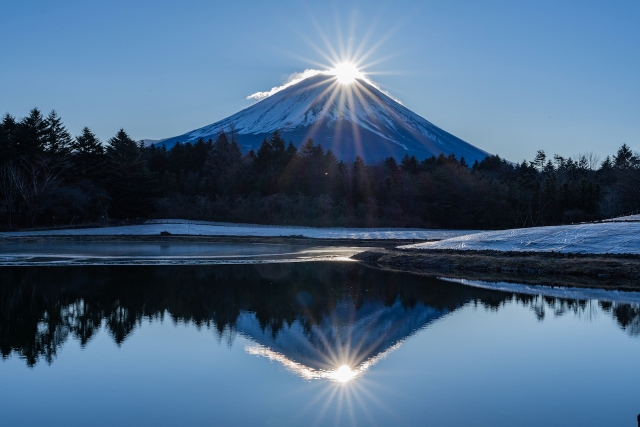
Mt. Fuji, or Fujisan as it is respectfully called in Japanese, is located on the border between Shizuoka and Yamanashi prefectures, in the very heart of the Japanese archipelago. Towering at 3,776 meters, it is the highest mountain in Japan and holds a central place in the nation’s identity.
Unlike other tall mountains around the world, Mt. Fuji is admired not only for its physical grandeur but for its deep emotional and spiritual resonance. Its almost perfectly symmetrical cone shape and snow-capped peak—often glowing with golden light at sunrise—create a breathtaking silhouette that has long stirred feelings of awe and reverence among the Japanese people.
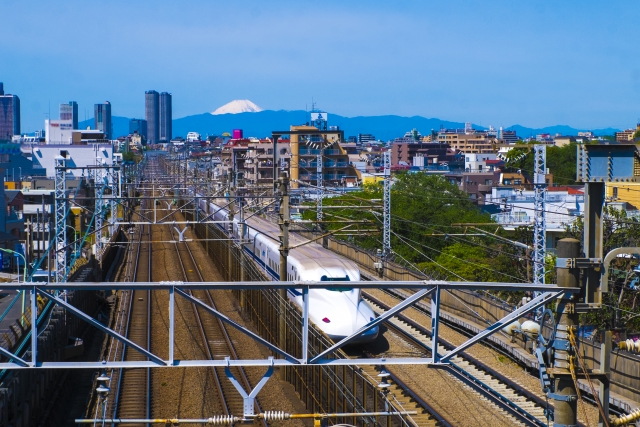
For many, Mt. Fuji is not merely a scenic landmark; it is a quiet presence that dwells in the background of their lives, from school textbooks and postage stamps to poems and songs. Even those who have never climbed it feel an intimate connection. It is said that seeing Mt. Fuji from afar on a clear winter day can evoke a sense of peace, nostalgia, and a feeling of being at home.
Throughout history, Mt. Fuji has stood not only as a natural monument but also as a guardian of the land and a silent witness to Japan’s changing seasons, social changes, and spiritual evolution.
Mt. Fuji as a Sacred Mountain
Like many sacred mountains around the world, Mt. Fuji is surrounded by myths and spiritual significance. However, its place in the hearts of the Japanese is truly exceptional. Its powerful volcanic energy, both feared and revered, led ancient people to offer prayers to appease its spirit.

The earliest known record of an eruption is found in 続日本紀Shoku Nihongi, compiled in 797, while earlier verses in 万葉集Manyoshu, Japan’s oldest anthology of poetry, also reference the volcano. A 1069 Buddhist painting depicts 聖徳太子Prince Shotoku climbing the mountain, symbolizing the fusion of Buddhist faith and native mountain worship. Prince Shotoku is sanctified as the founder of Japan’s centralized nation in Nara era(8th to 9th century) and devoted in prevalence of Buddhism.
During the Heian period, Mt. Fuji became a site for spiritual practices such as 修験道Shugen-do, a form of ascetic training that combined Buddhism with Japan’s ancient reverence for nature. In the Edo period, common people formed religious associations called 富士講Fujiko and made pilgrimages to the summit. For them, climbing Mt. Fuji and watching the sunrise from the peak—an act called Goraikō—was believed to cleanse the spirit and bring protection from misfortune.
Even today, many Japanese see the climb not simply as a physical challenge but as a personal and spiritual experience.

UNESCO World Heritage Site
In 2013, Mt. Fuji was designated as a UNESCO World Cultural Heritage Site under the title “Fujisan, sacred place and source of artistic inspiration.” This recognition was not based on natural features alone but highlighted the mountain’s long-standing role in Japanese religion, art, and spiritual practice.
The designation acknowledged Mt. Fuji as a symbol of Japanese cultural identity, both as a place of worship and a wellspring of artistic creativity. It reaffirmed what many Japanese people have always known—that Mt. Fuji is not just beautiful, but spiritually meaningful.
Mt. Fuji in Art and Culture
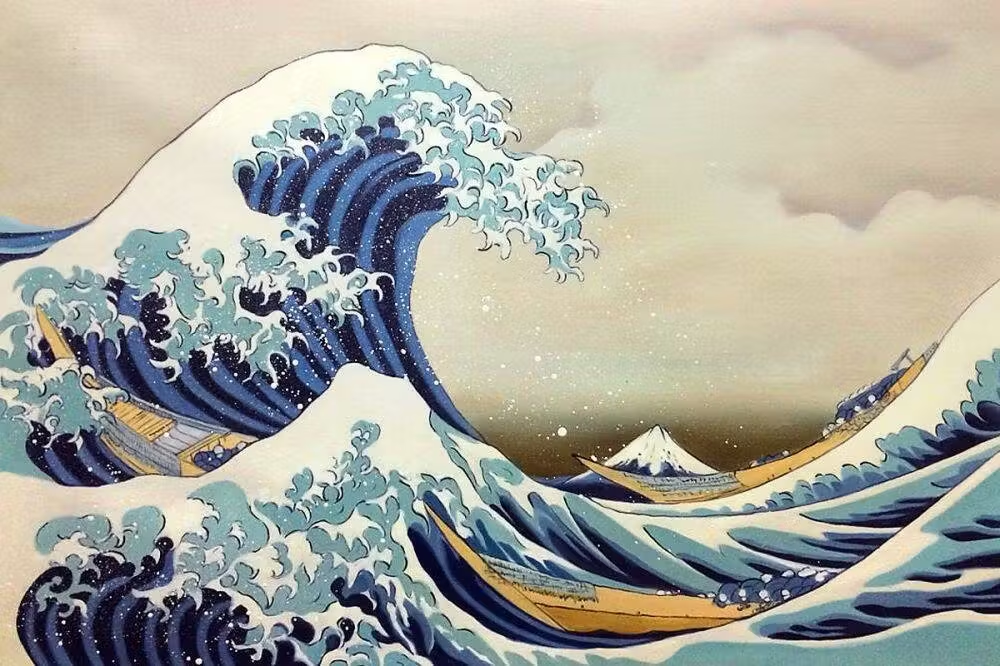
The Great Wave off Kanagawa
(葛飾北斎 神奈川沖浪裏)
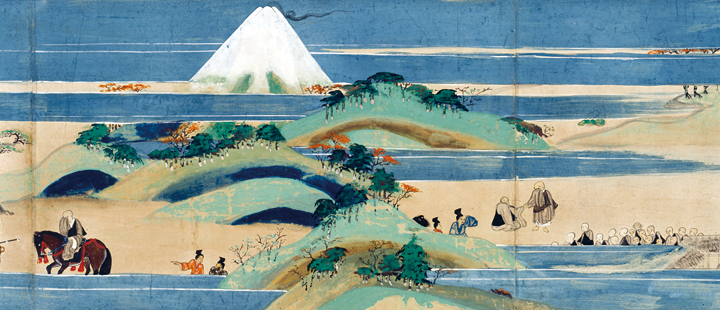
Mt. Fuji has long served as a source of inspiration in Japanese art, literature, and religious iconography. The most famous artistic representations are 葛飾北斎Katsushika Hokusai’s woodblock print series 富嶽三十六景Fugaku sanju rokkei, including The Great Wave off Kanagawa, and 歌川広重Utagawa Hiroshige’s work 不二三十六景Fuji sanju rokkei. These prints show the mountain from various perspectives, capturing its shifting moods and its place in everyday life.

(横山大観 霊峰不二)
Earlier religious scrolls, such as the Yugyō Shōnin Engi-e(遊行上人縁起絵)from the Kamakura period and Fuji Mandara-zu from the Muromachi era, depict the mountain in sacred contexts, often as a backdrop for Buddhist teachings. In the Meiji period, painters like 横山大観Yokoyama Taikan portrayed Mt. Fuji as a solemn spiritual force(霊峰), reflecting the mountain’s timeless importance to the Japanese psyche.
Mt. Fuji and the Spirit of Home – Furusato
For generations of Japanese, Mt. Fuji represents more than a majestic mountain; it is a symbol of Furusato—a word that means “hometown” but implies something deeper: a spiritual anchor, a place where one’s heart belongs. (Please refer to my previous post of “Furusato“)
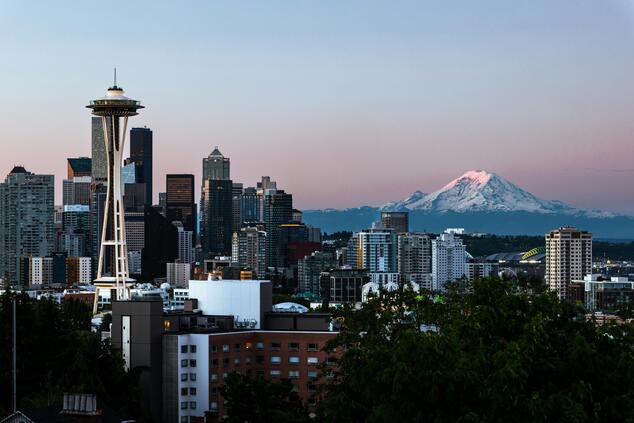
Since the Meiji era, many Japanese people have emigrated abroad. When encountering mountains that resembled Fuji—such as Mt. Rainier in the city of Tacoma, WA, U.S.—they often named them affectionately “Tacoma Fuji,” a gesture that reveals how deeply the image of Fuji is tied to the feeling of home.
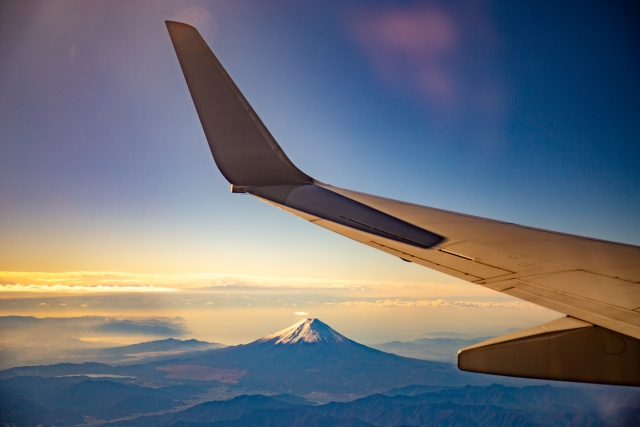
from the airplane window
I personally experienced this sentiment after returning from seven years of work in Hong Kong. As the airplane descended and Mt. Fuji came into view from the window, I was overwhelmed with emotion—a quiet, unmistakable sense of returning, of being home. This is not a rare experience. Many Japanese feel the same: that simply seeing Mt. Fuji can connect them to something unshakably rooted within.
Seasonal Beauty of Mount Fuji
The beauty of Mount Fuji changes dramatically with the seasons, offering a different impression each time you see it. In Japan, these seasonal changes are not just visual — they are deeply connected to emotions, memories, and ways of appreciating nature.
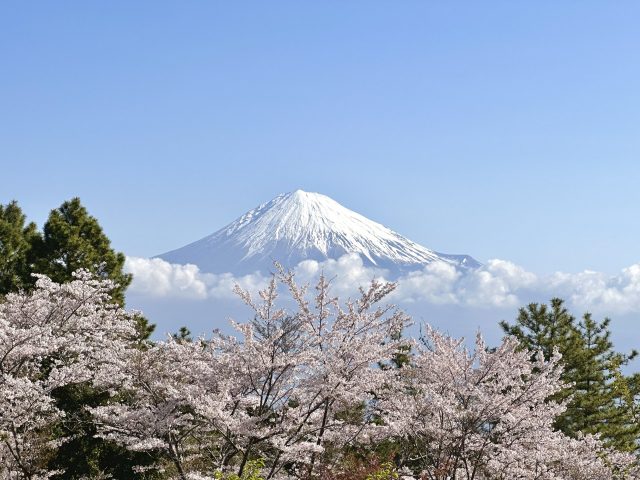
Spring – Cherry Blossoms and New Beginnings
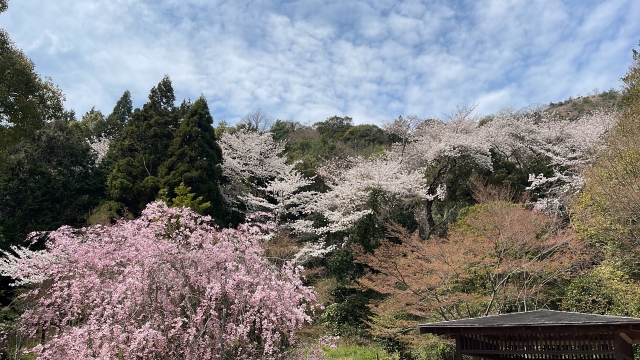
In spring, Mt. Fuji is often framed by delicate cherry blossoms, Sakura, creating one of the most iconic scenes in Japan. This season is also a time of new beginnings, as schools and businesses start in April. Seeing Mt. Fuji during this time often brings a sense of hope, nostalgia, and quiet excitement.
Summer – Climbing Season and Clear Skies

Summer is the official climbing season for Mt. Fuji, when thousands of people make the journey to the summit. Under clear blue skies, the mountain feels closer and more accessible — not just something to admire from afar, but something to experience directly.
Autumn – Crisp Air and Subtle Colors
In autumn, the air becomes clear and crisp, offering some of the best views of Mt. Fuji. While the mountain itself remains unchanged, the surrounding landscapes transform with autumn colors, adding a quiet and reflective mood to the scenery.
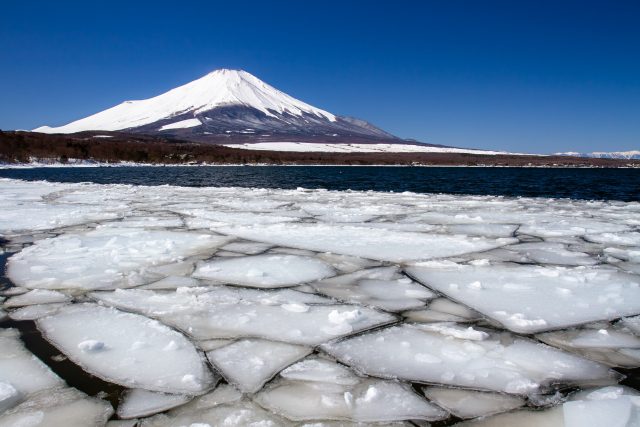
Winter – Silence and Perfection
In winter, Mt. Fuji is covered in snow, creating its most iconic and symmetrical appearance.The cold air brings exceptional clarity, and the mountain often appears almost unreal — silent, distant, and perfectly still.
No matter when you visit, Mt. Fuji offers a unique experience shaped by the season — and by your own perspective. Seasonal beauty in Japan is also beautifully expressed through sakura, which reflect the emotional connection between people and nature. 👉 Discover the meaning of Sakura
Travel & Access to Mount Fuji
Mount Fuji is easily accessible from Tokyo and other major cities, making it a popular destination for both domestic and international travelers. Many visitors travel by train or bus to areas such as Kawaguchiko or Fujisan Station. From there, local transportation or tour buses provide access to the fifth station, which serves as the starting point for many climbing routes.
While day trips are possible, staying overnight in the area allows you to experience the mountain in different lights — especially at sunrise and sunset.
For a convenient and well-organized visit, guided tours are available from Tokyo.
👉 Explore Mt. Fuji Area Tours
Experience Mount Fuji Beyond the View
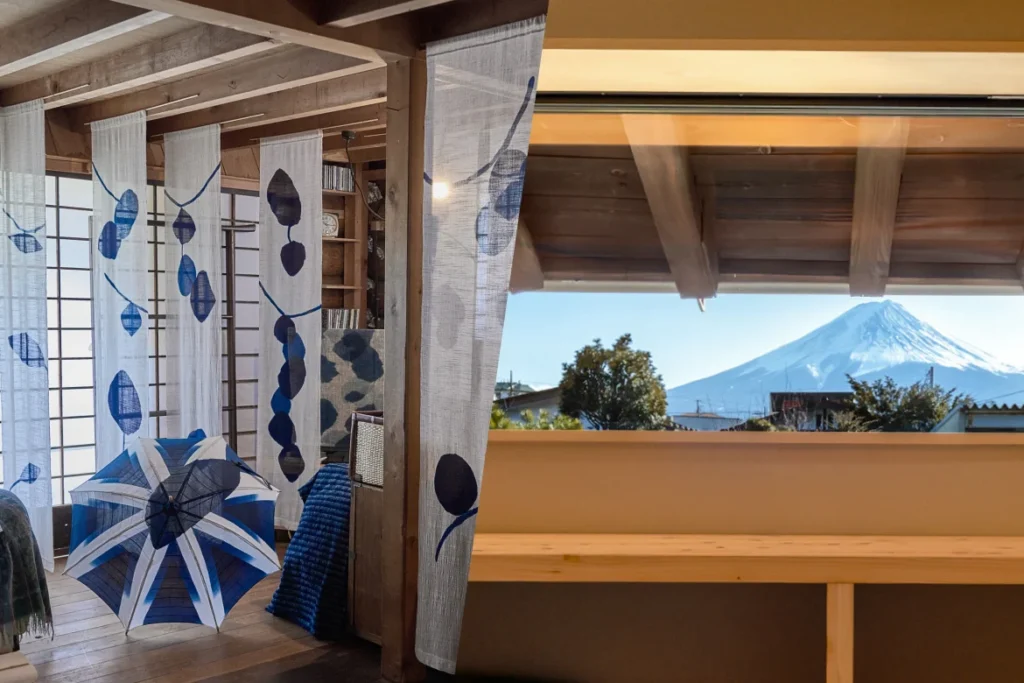
of Mt. Fuji – (Photo courtesy of Wabunka)
Seeing Mount Fuji is unforgettable — but in Japan, its true meaning goes beyond the view.
For centuries, the mountain has been a place of spiritual practice and reflection. Even today, many cultural experiences in Japan reflect this same mindset — valuing mindfulness, respect, and harmony with nature.
By engaging in traditional activities such as tea ceremonies, temple visits, or guided cultural experiences, visitors can begin to understand the deeper philosophy behind Mt. Fuji and Japanese life.

Around – (Photo courtesy of Wabunka)
👉 Discover authentic cultural experiences at the Foot of Mt.Fuji
👉 Discover authentic cultural experiences in Mt.Fuji and Around
Conclusion
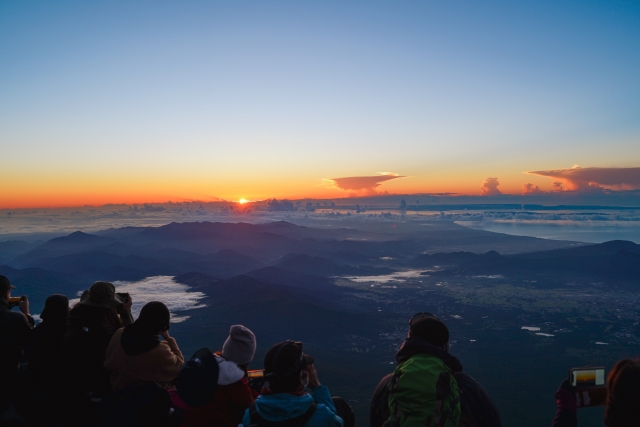
at the summit of Mt. Fuji
Mount Fuji is not merely a mountain — it is a spiritual presence woven into the fabric of Japanese life.
It stands as a quiet companion, a source of strength and reflection, and a mirror of the Japanese soul. From ancient beliefs to modern-day feelings of furusato, the mountain embodies both the sacred and the personal.
When you visit Japan, Mt. Fuji is not only something to see, but something to feel — a reminder of the deep connection between nature, culture, and human emotion.
Share Your Thoughts
Have you experienced something similar in your own culture?
Your reflections are welcome.
💬 Jump to the comment section


コメント
My kindergarten teacher had a poster maybe of Mount Fuji-san many years ago, and that imagery entered into a childhood drawing of mine. Her calm personality created a positive impact. This was nice to read, as I consider hanging my childhood drawing.
Thank you very much for sharing such a warm memory.
I’m delighted to hear that this article brought back the image of Mount Fuji from your childhood.
It truly means a lot to me that you are taking an interest in Japan, and I’m very happy if my writing can help you learn more about it.