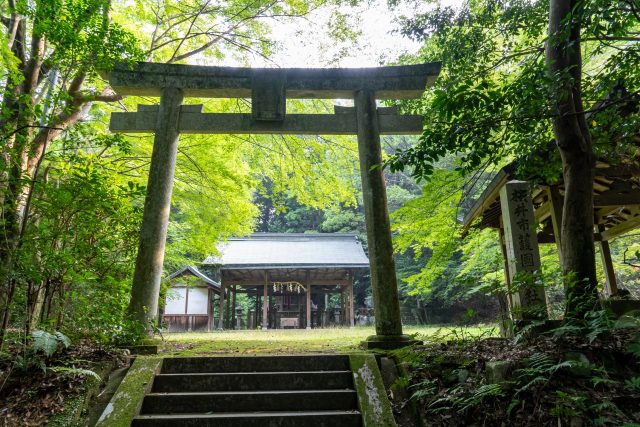
- How Nature Shaped the Japanese Concept of Kami
- The Origins of the Japanese Sense of Kami
- The Formation of the Japanese State and Its Spiritual World
- The Kojiki and Nihon Shoki: A Mythological History of Japan
- The Kami of Japanese Mythology Still Worshipped Today
- Shinto: A Tradition Rather Than a Single Doctrine
- From Ancient Mythology to Everyday Life
- Conclusion — Understanding Kami
How Nature Shaped the Japanese Concept of Kami
When people in the West hear the word “God,” they often imagine one supreme and omnipotent being. The Japanese concept of kami (神) is quite different.
The word kami is often translated into English as “god” or “deity,” but neither word completely captures its meaning. In Japan, kami can refer to beings from ancient mythology, sacred forces associated with nature, historical people who were later deified, and spiritual beings associated with particular places or communities.
One traditional expression, Yaoyorozu no Kami (八百万の神), is literally translated as “eight million kami.” The number is not meant to be exact. Rather, it expresses the idea that countless kami exist throughout the world.
To understand why Japan has such a distinctive concept of the sacred, we need to look back to the origins of Japanese spirituality.
The Origins of the Japanese Sense of Kami
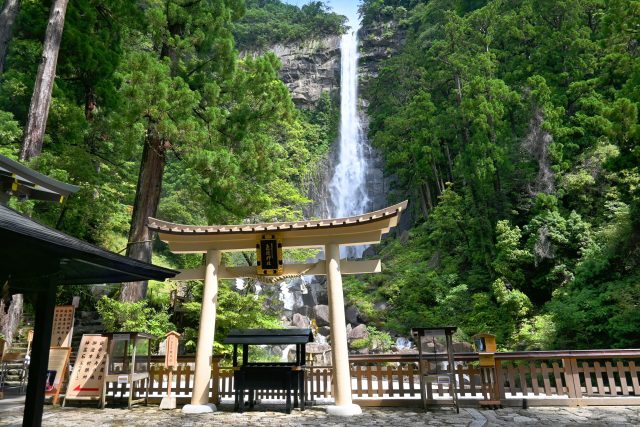
Long before Japan had written historical records, people lived closely with nature.The sun, mountains, rivers, forests, wind, rain, thunder, and the sea could bring both blessings and disasters. Crops depended on the weather, while earthquakes, storms, volcanic eruptions, and floods could threaten people’s lives. In such an environment, people developed a sense of awe and reverence toward powers beyond human control.
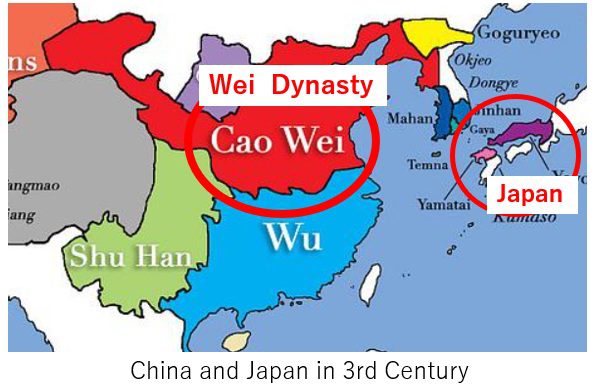
This ancient way of seeing the world is often described as animism: the belief that natural phenomena and living things may possess a spirit or sacred presence.
It is important, however, not to think of this as a fully developed religion with a founder, scripture, or fixed doctrine. Rather, reverence for nature and unseen powers appears to have developed gradually among the people of ancient Japan.
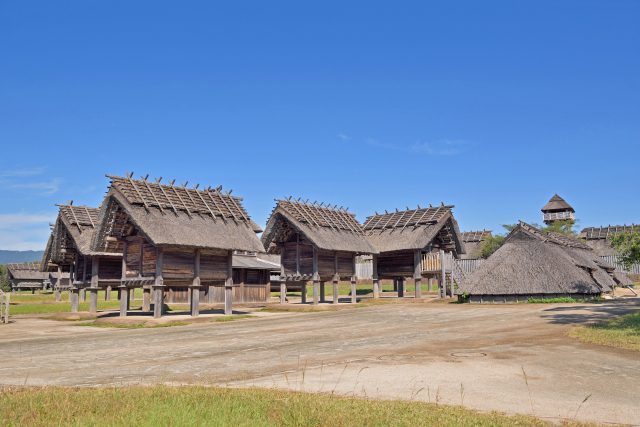
An early Chinese historical record provides a glimpse into this spiritual world. In the third century, the Wei Zhi described a ruler of Yamatai named Himiko. She was described as having spiritual or shamanic powers and communicating with unseen forces. Although the historical details surrounding Himiko remain debated, the account suggests that spiritual authority and communication with unseen forces already played an important role in ancient Japanese society.
Japanese spirituality, therefore, did not begin with a theological system. It grew from people’s relationship with the natural world and their sense of the unseen.
The Formation of the Japanese State and Its Spiritual World
The development of the Japanese state brought a new dimension to this ancient spiritual world. The name “Yamatai” first appeared in the Chinese Wei Zhi in the third century. Several centuries later, the Yamato court had developed into a powerful political authority.
In the seventh and eighth centuries, Japan established increasingly sophisticated systems of government. In 604, Prince Shotoku is traditionally said to have issued the Seventeen-Article Constitution. Its first article famously emphasized the importance of harmony, or Wa. The idea of Wa became deeply rooted in Japanese culture. For more about this philosophy, see my article The Origin of the Philosophy of “Wa.”
Later, Japan established the Ritsuryo system, a comprehensive system of administrative and criminal laws. These developments helped shape a more centralized Japanese state.
It was during this period of state formation that two important works were compiled:
- Kojiki, completed in 712
- Nihon Shoki, completed in 720
These works became fundamental written sources for the mythology associated with the imperial tradition.
The Kojiki and Nihon Shoki: A Mythological History of Japan
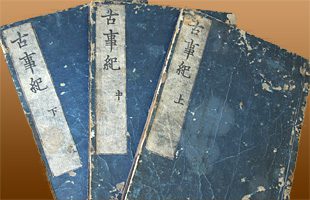
The Kojiki and Nihon Shoki contain stories about the creation of the Japanese islands, the origins of the kami, and the ancestry of the imperial family. They are not historical records in the modern sense. They combine myths, legends, genealogies, and accounts of ancient rulers.Their stories also helped establish the legitimacy of the Yamato imperial court by connecting the imperial family with the world of the kami.
According to these myths, the Japanese islands were created by divine beings, and generations of kami appeared in the heavenly and earthly worlds. One of the most important is Amaterasu Omikami, the sun kami and a central figure in the imperial mythology.
The mythology eventually connects the imperial line with the divine world through Emperor Jimmu, traditionally regarded as the first emperor of Japan. The Three Imperial Regalia—the sacred mirror, sword, and jewel—also became important symbols of the imperial tradition.
These stories belong to the realm of mythology rather than history as understood today. Nevertheless, they continue to influence Japan’s religious and cultural landscape.
The Kami of Japanese Mythology Still Worshipped Today
Many kami appearing in the Kojiki and Nihon Shoki are still worshipped at Shinto shrines throughout Japan.
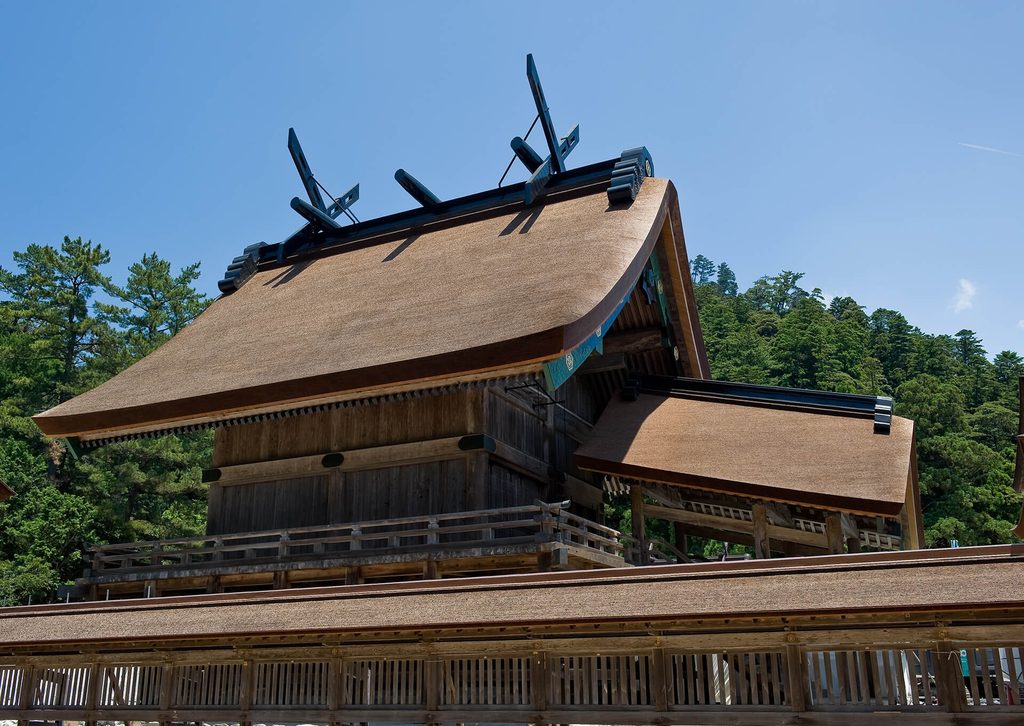
Izumo Taisha
Izumo Taisha is one of the most important shrines associated with Ōkuninushi, a major kami associated with the formation and ordering of the land.
Ise Jingu
Ise Jingu is the principal shrine dedicated to Amaterasu Omikami, the sun kami and one of the central figures of the imperial mythology.
Amano Iwato Shrine
Amano Iwato Shrine is associated with the famous myth in which Amaterasu hides inside a heavenly rock cave, causing the world to become dark.
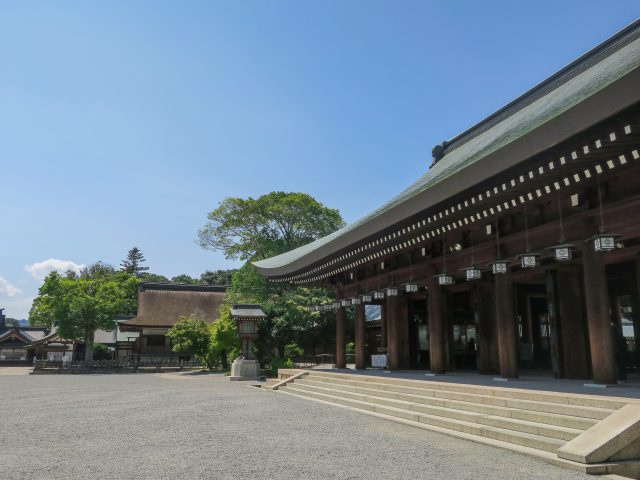
Kashihara Jingu
Kashihara Jingu is dedicated to Emperor Jimmu, traditionally regarded as the first emperor of Japan.
Fushimi Inari Taisha
Fushimi Inari Taisha is dedicated to Inari Okami, a kami associated with rice, agriculture, prosperity, and commercial success.
For visitors, these shrines can be more than beautiful historical sites. Learning the stories of the kami enshrined there provides another way to understand the Japanese worldview.
Shinto: A Tradition Rather Than a Single Doctrine
The word “Shinto” literally means “the way of the kami.” Unlike religions centered around a single founder or a single revealed scripture, Shinto developed gradually from ancient Japanese traditions of reverence toward kami, nature, ancestors, and sacred places.
The Kojiki and Nihon Shoki did not create these traditions from nothing. Rather, they recorded and organized myths and traditions that had developed over a much longer period.This is important when trying to understand Shinto.It is not simply a system of beliefs about a fixed group of gods. It is also a way of relating to the sacred world.
From Ancient Mythology to Everyday Life
The ancient mythology recorded in the Kojiki and Nihon Shoki is only one part of the Japanese concept of kami. Over the centuries, historical people became kami. Natural places became sacred. Local communities came to worship their own guardian kami.
Even today, small shrines can be found in neighborhoods, villages, mountains, and beside roads throughout Japan.
This means that the story of kami did not end with ancient mythology. It continued to evolve with Japanese society.
Conclusion — Understanding Kami
The Japanese concept of kami has no simple English equivalent.
The word “God” usually suggests one supreme and omnipotent being. The word “deity” is more flexible and is useful when discussing the many sacred beings found in Japan.
But kami can mean something broader. It can refer to a mythological being, a sacred force, a historical person who became deified, or the sacred presence associated with a particular place. Perhaps this flexibility is one of the most important characteristics of Japanese spirituality.
To understand Japan, therefore, it is not enough to ask, “What are the Japanese gods?” A better question may be:
“What does it mean for something to be sacred in Japan?”
The answer takes us from ancient myths and the formation of the Japanese state to mountains, shrines, communities, and everyday life. And that is where the deeper meaning of kami begins to appear.

コメント