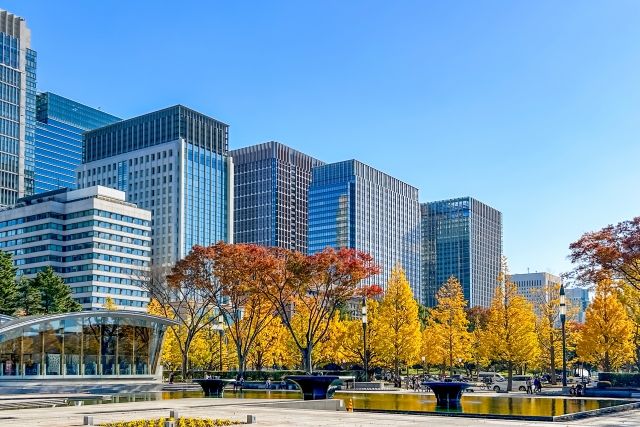
Introduction
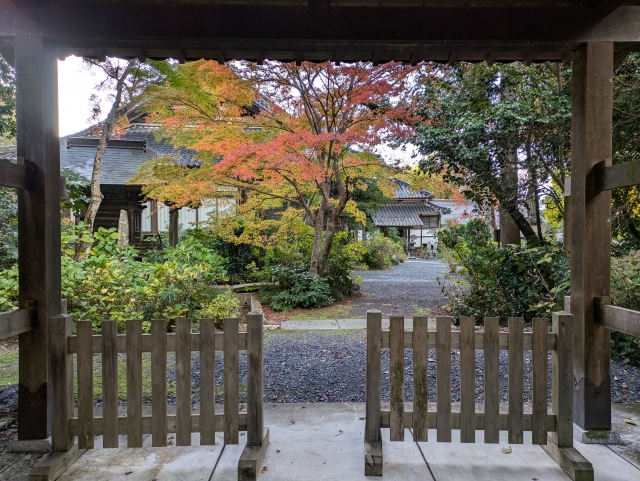
As October arrives and the mornings and evenings grow cooler, I start to notice the changing colors of the maple (momiji) trees. On my way to the station, I often stop at the temple near my house to watch the leaves in its yard. Day by day, the green turns into orange, then into deep red. By late October to November, the entire tree glows in brilliant crimson. This is what we call Koyo (紅葉), the breathtaking autumn foliage of Japan.
What is Koyo?
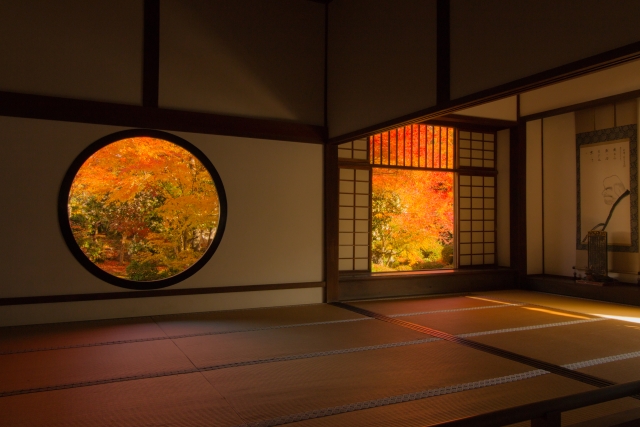
In Japan, many trees change color in autumn—yellow ginkgo, orange zelkova, and more—but the maple (momiji) is the most beloved. Interestingly, the word 紅葉 can be read as koyo (“red leaves”) or as momiji (“maple tree”), reflecting both the tree and the vivid transformation of its leaves.
When you visit a famous Koyo spot, you are often astonished by the harmony of colors: bright yellow, fiery orange, deep red, and patches of green. It looks like a giant canvas painted by nature. Each tree species has a slightly different shade, allowing us to enjoy countless variations.
This seasonal transformation is one of the most iconic expressions of Japanese aesthetics, where change itself is considered beautiful.
But this beauty does not last forever. As the temperature drops and winter approaches, the leaves fall, and the trees soon stand bare against the cold sky. This change reminds Japanese people of an important cultural idea: 無常観 (Mujōkan), the Buddhist concept of impermanence.
Koyo and the Japanese Sense of Impermanence (無常観 Mujōkan)
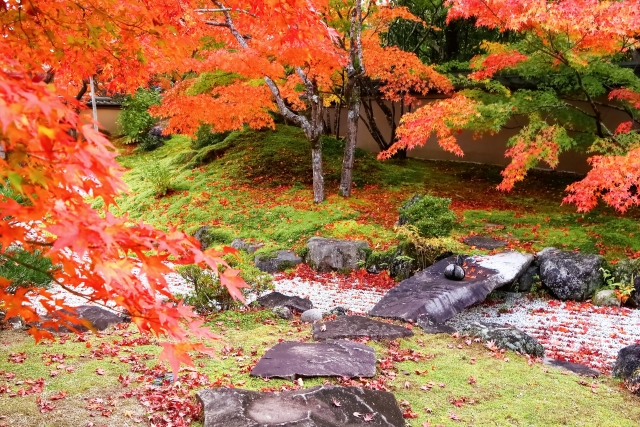
Japan is blessed with four seasons, and with each change we are reminded that time passes and nothing remains the same. Even the most beautiful scenery must eventually fade. Knowing this, we try not to cling to sorrow, but instead to cherish the fleeting beauty of the moment.
This sense of impermanence—無常観 Mujōkan—is deeply rooted in Buddhism and has shaped Japanese aesthetics. A famous poetry anthology from the 13th century, the Shin Kokin Waka-shu, includes many verses on transience.
One waka by Fujiwara no Teika captures this feeling:
見渡せば花も紅葉もなかりけり、浦の苔屋の秋の夕暮れ
As I gaze around, no flowers, no crimson leaves—only a moss-covered hut by the inlet, in the quiet of an autumn evening.
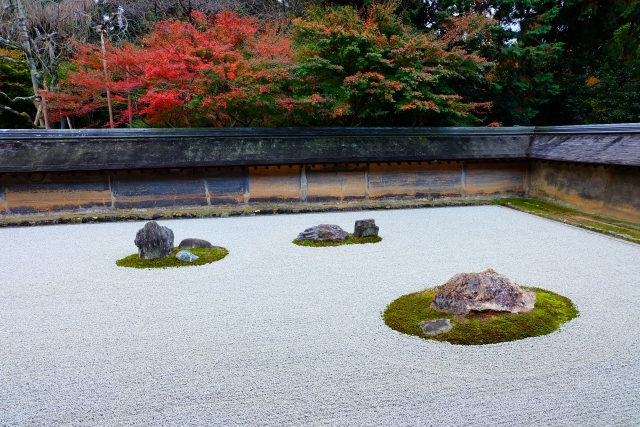
This poem reflects the fleeting nature of autumn leaves. Even as beauty disappears, the moment itself carries meaning. The same spirit can be found in sakura (cherry blossoms), tea ceremony, and even the rock gardens (karesansui) of Zen temples. All remind us of 一期一会 Ichigo-Ichie, the idea that each encounter happens only once in a lifetime.
Best Places to See Autumn Leaves in Japan
Nikko (日光) – Tochigi Prefecture
Just two hours by train from Tokyo, Nikko is one of the most famous autumn foliage destinations. It is also a popular school trip location for Japanese students. Nikko is home to sacred sites such as Toshogu Shrine (dedicated to Tokugawa Ieyasu), Rinno-ji Temple, and Futarasan Shrine, where nature and architecture blend harmoniously. In autumn, the brilliant colors of Koyo make these historic sites even more unforgettable.
Chuzenji Lake (中禅寺湖)
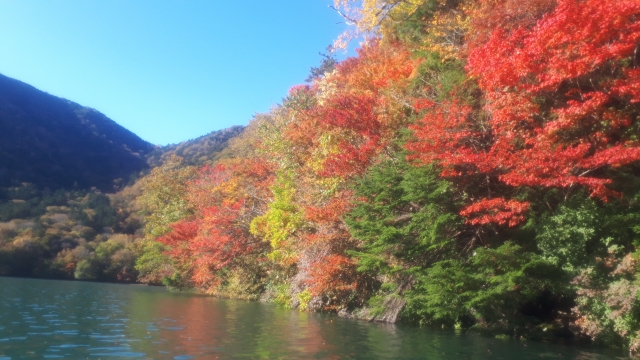
- Best season: Mid October – Early November
- About 50 minutes by bus from Tobu Nikko Station
- Japan’s highest-altitude natural lake
- The reflection of autumn leaves on the water is stunning
- Nearby hot spring resorts make it a perfect autumn trip
Kegon Falls (華厳の滝)
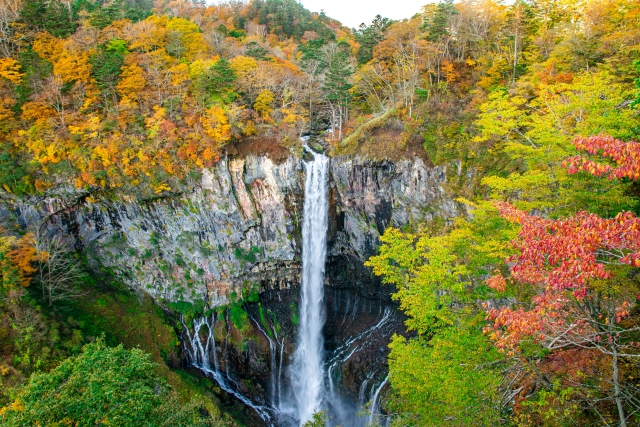
- Best season: Mid October – Early November
- About 45 minutes by bus from Tobu Nikko Station, 5 minutes from Chuzenji Lake
- A 97-meter waterfall, one of Japan’s “Three Great Waterfalls”
- Surrounded by fiery autumn leaves—truly dynamic scenery
- In winter, the partially frozen falls create a completely different atmosphere
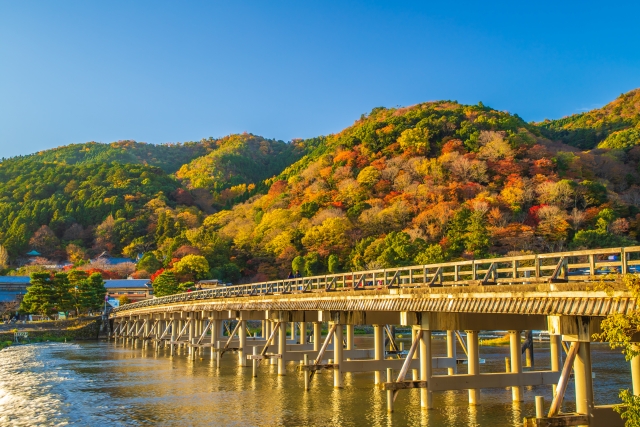
Other Famous Koyo Spots in Japan
- Tokyo – Mt. Takao (高尾山) (Mid Nov – Early Dec)
- Niigata – Yahiko Park (弥彦公園・もみじ谷) (Late Oct – Mid Nov)
- Kyoto – Arashiyama (嵐山) (Mid Nov – Early Dec)
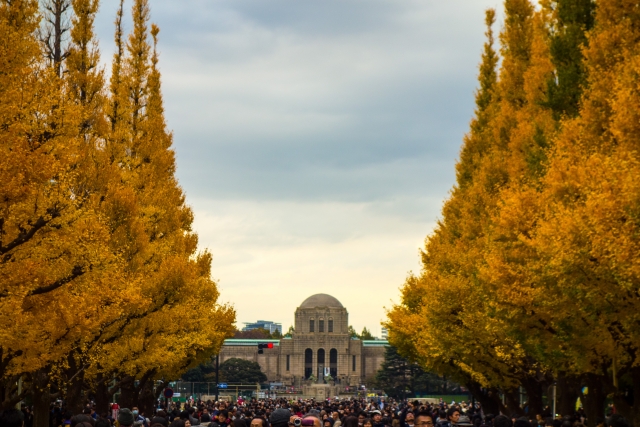
- Tokyo – Meiji Jingu Gaien (明治神宮外苑) (Mid Nov – Early Dec)
- Yamanashi – Lake Kawaguchi (河口湖畔) (Mid Nov – Late Nov)
- Hiroshima – Miyajima (紅葉谷公園) (Mid Nov – Late Nov)
- Nagano – Kamikochi (上高地) (Mid Nov – Late Nov)
Conclusion

(Photo courtesy of Wabunka)
Koyo (autumn foliage) is not only a seasonal attraction in Japan, but also a reflection of how Japanese people perceive nature—through change, silence, and impermanence. This perspective is closely connected to the idea of Mujōkan, the awareness that all things are transient.
To truly understand this feeling, it is best experienced rather than simply observed.
👉 Discover Japan’s seasonal cultural experiences through Wabunka



コメント